The building safety crisis: a year of Labour in power, still no end in sight for leaseholders

It’s a year since Labour came to power with manifesto commitments to fix the failed approach to the cladding and building safety scandal and deliver meaningful change. In that time, we have seen announcements, had many meetings with government, Homes England, the Building Safety Regulator, the NHF, G15, The Leasehold Advisory Service, developers, insurers, and a range of others. But on the ground – in the eyes of leaseholders and residents who remain trapped – nothing has changed.

Continue reading “The building safety crisis: a year of Labour in power, still no end in sight for leaseholders”
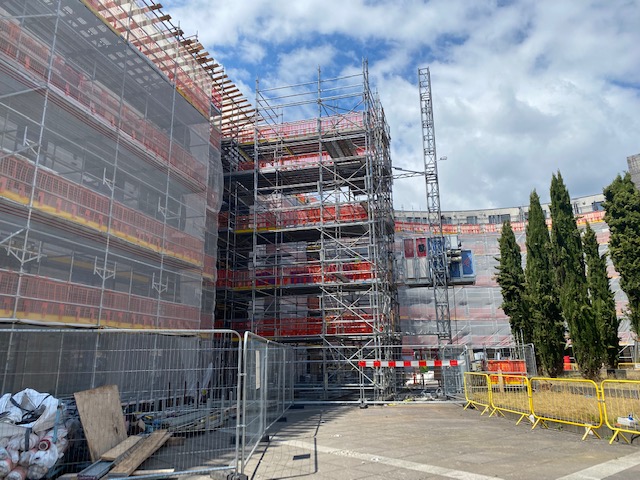
Our letter to the Deputy Prime Minister and the Minister for Building Safety, and our meeting with Angela Rayner

On 28th September, we wrote to Angela Rayner and Rushanara Ali to ask that they do whatever it takes to ensure that Labour’s solution to the cladding scandal and building safety crisis is comprehensive, protects all innocent victims, and can be delivered quickly. We then met with Angela Rayner last week to discuss our letter.

Continue reading “Our letter to the Deputy Prime Minister and the Minister for Building Safety, and our meeting with Angela Rayner”

Our response to DLUHC’s Call for Evidence on Jointly Owned Leases

In a press release in November 2023, the Government promised that the Leasehold and Freehold Reform Bill (LFRB) would include measures to ensure “that the leaseholder protections are not unfairly weighted against those who own properties jointly”. Yet on 1st May 2024, during the Committee Stage of the Bill in the House of Lords, Baroness Scott of Bybrook, DLUHC’s minister in the Lords, seemed to indicate that the Government might be preparing its excuses for not fulfilling its commitment to correct the unfairness to leaseholders who own properties jointly. She said, “Changing the leaseholder protection regime so that it is linked to a share of ownership, rather than individual properties, would also introduce an unnecessary level of uncertainty and complexity into the protections.”

Continue reading “Our response to DLUHC’s Call for Evidence on Jointly Owned Leases”

Our meeting with the Building Societies Association

In January, we met with the Building Societies Association (BSA), to highlight the continuing difficulties that leaseholders affected by the building safety scandal are having with remortgaging and selling their homes.

Continue reading “Our meeting with the Building Societies Association”

Half of high-rise mortgage valuations still require an EWS1 despite industry pledge

In an attempt to revive the flatlining market for flats affected by cladding and other building safety defects, major mortgage lenders pledged in December 2022 that they would lend without an EWS1 form being required under certain conditions. However, the latest government data shows no improvement on this measure since reporting began three years ago. 

Continue reading “Half of high-rise mortgage valuations still require an EWS1 despite industry pledge”
London City Hall

Are shared owners in London being left behind?

On 19 December 2023, Secretary of State Michael Gove wrote to all registered providers (e.g. housing associations) to let them know about changes the Government has made to relax rules on subletting and funding available for buybacks of shared ownership properties. He also asked registered providers to publish their policies online.

Continue reading “Are shared owners in London being left behind?”

Our report from Bellway’s 2023 AGM

On Friday 15th December 2023, two members of our team, both leaseholders in Bellway buildings, went to Bellway’s AGM in Newcastle. We would like to thank ShareAction for their support in arranging attendance.

Continue reading “Our report from Bellway’s 2023 AGM”

Our report from Redrow’s 2023 AGM

As we near the end of 2023, six-and-a-half years after Grenfell, there are still an estimated 10,000 buildings with unremediated fire safety defects across the country. As these years have passed, there has been too little action, at the scale needed, to make our homes safe. If this were any other product with life-critical safety defects, customers would have received a replacement or full refund, perhaps even compensation. Yet when it comes to our homes, we have had to wait several years for the Government and construction industry to agree who should pay to make them safe. 

Continue reading “Our report from Redrow’s 2023 AGM”